
In the world of professional tennis, the difference between victory and defeat often comes down to meticulous preparation. Before the electrifying atmosphere of a Grand Slam engulfs players, the need to fine-tune skills and strategies is often met in smaller, yet equally competitive, tournaments. Enter the Hobart International, a Women’s Tennis Association (WTA) event that has, for years, held a vital spot on the tennis calendar.
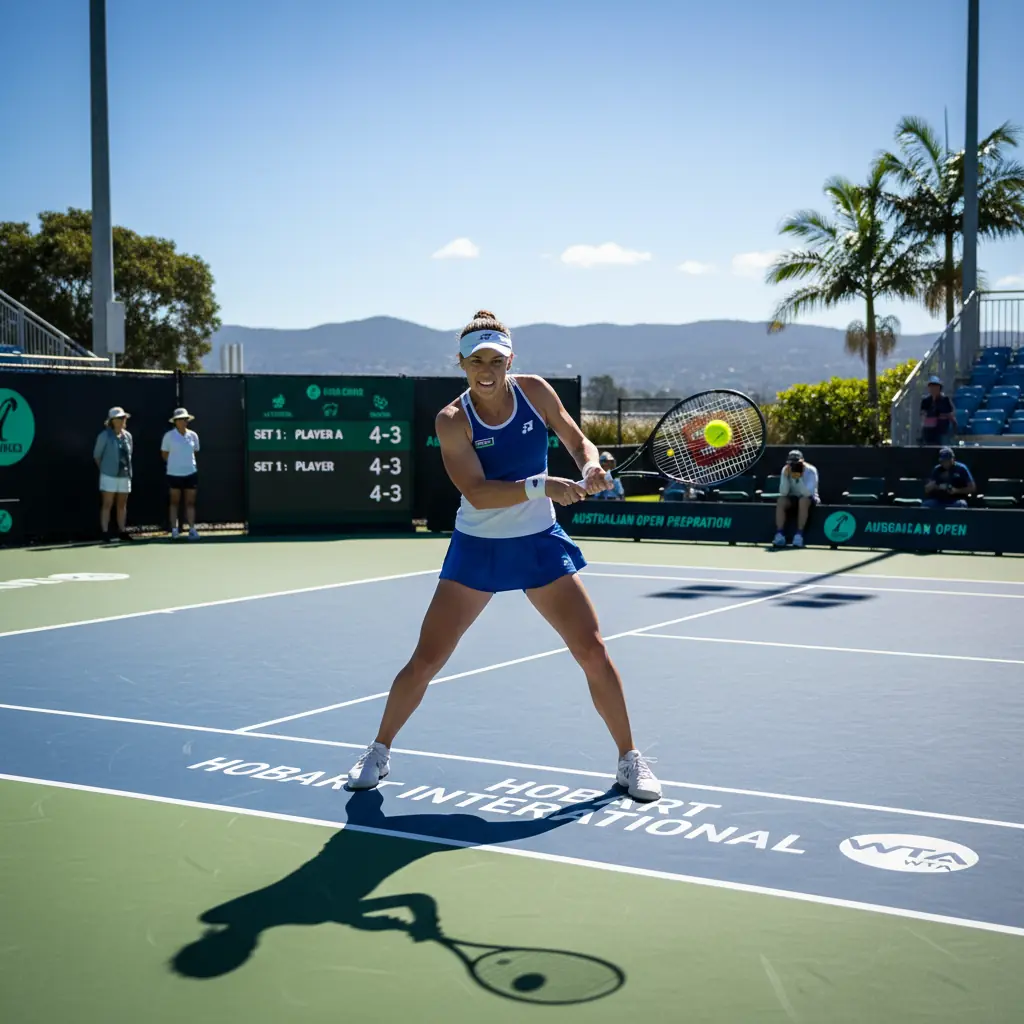
Positioned strategically just before the Australian Open, the Hobart International serves as the ultimate tune-up tournament. This timing isn’t accidental; it’s a deliberate placement that allows players to acclimate to the Australian climate and court conditions, test their form, and iron out any kinks in their game before the pressure cooker of a major championship. For many, it’s more than just another tournament; it’s a crucial stepping stone, a final chance to gain momentum and confidence before stepping onto one of tennis’s biggest stages. The Hobart International offers something invaluable: the opportunity to transition from rigorous training to high-stakes competition, ensuring they are primed and ready to compete at their peak when it truly matters.
Why Hobart Matters: The Significance of a Pre-Australian Open Tournament
The Hobart International, preceding the Australian Open, might seem like a smaller blip on the tennis radar, but it holds significant strategic value for players fine-tuning their game for the big stage. It’s more than just another tournament; it’s a crucial opportunity to gain match play experience, become familiar with the Australian court conditions, and build the psychological fortitude needed to navigate the pressures of a Grand Slam. The benefits gained here are not just theoretical for improving their gameplay and performance, but practical, offering a tangible advantage heading into Melbourne.
For many players, this tournament is a dress rehearsal of sorts. It allows them to experiment with different strategies, test out new equipment under pressure, and get a real feel for their current form. The intensity of competitive match play simply cannot be replicated on the practice courts. It’s this real-world experience that separates those who are truly prepared from those who are merely hoping for the best.
The Hobart International offers a unique opportunity to adjust to the Australian climate and court conditions before the Australian Open.
Acclimatization and Court Familiarity
Acclimatization is key. Arriving in Australia just before the Open can be a shock to the system. The heat, humidity, and jet lag can all take a toll on a player’s body and performance. Hobart offers a gentler introduction, allowing players to gradually adapt to the conditions. This reduces the risk of heat-related injuries and ensures better stamina during those grueling five-set matches. The more court time that a player gets ahead of time, the better their odds are.
The court surface in Hobart closely mimics that of the Australian Open, providing a valuable opportunity to adjust footwork, and shot selection. Every surface is different, and even a small adjustment to a player’s timing can create a monumental shift in performance.
Building Momentum and Confidence
Tennis is as much a mental game as it is a physical one. Building momentum and confidence is necessary. A strong performance in Hobart, even if it doesn’t result in a tournament win, can provide a significant psychological boost. A winning streak, no matter how short, reinforces a player’s belief in their abilities and can create a sense of invincibility that carries over to the Australian Open.
Many players have used smaller tournaments as springboards to Grand Slam success and can often gain their confidence for the matches to come. These victories are not just about the trophies, but about building the mental resilience needed to compete at the highest level.
Key Players to Watch: Breakout Stars and Established Names
The Return of Emma Raducanu
All eyes are on Emma Raducanu as she makes her highly anticipated return to the court. The Grand Slam champion has faced challenges with injuries, but Hobart International marks a significant moment in her comeback journey. Her aggressive style and fearless play could make her a compelling player to watch, provided she’s fit. The tournament will be a test of her resilience and a chance to reignite the spark that once made her a dominant force in tennis.
The Experience of Elise Mertens
Elise Mertens brings a wealth of experience to the Hobart International. As a two-time champion, she knows what it takes to succeed on these courts. Mertens is known for her consistency, tactical intelligence, and all-around solid game. Tournament experience brings a player confidence and calmness that can get you far. If Mertens is in top form, she will be a favorite in the tournament.
Strategic Insights: What to Look for in Hobart Matches
To truly appreciate and understand Hobart matches, one must look beyond the raw scores and delve into the strategic nuances that dictate the outcomes. Various elements influences how players adapt and perform. Paying attention to these aspects can significantly enrich the viewing also analytical experience of Hobart matches. It’s about understanding why certain players thrive and anticipating tactical shifts during a match.
An interesting thing to watching is how weather conditions impact player strategies. Some players naturally adjust their game better than others when faced with wind, while others may suffer when heat kicks in. Moreover, different court types will be more favorable to certain players based on their skill sets and expertise.
Adapting to Court Speed
Court speed is extremely influential regarding tennis strategy because it affects how and when players react. Faster courts reward assertive “serve and volley” methods, enabling players to deliver powerful serves with quick net follow-ups, reducing reaction time for their competitors. On the other hand, slower courts favor players with strong groundstrokes who can construct rallies and depend on opponent errors, therefore neutralizing the effectiveness of swift serves. Recognizing these inclinations enables someone to anticipate adjustments and understand and analyses of how players change their plans during matches.
Weather’s Impact on Match Dynamics
Weather introduces layers of complexity to tennis matches, significantly affecting performance and strategy. For instance, wind can disrupt serves and groundstrokes, leading players to adopt more conservative tactics, like higher net clearance also increased spin. Heat affects a player’s stamina, and forces players to shorten rallies. Watching if and how players adjust to weather conditions adds an interesting point of view during the match.

From Hobart to Melbourne: Predicting Australian Open Success
The Australian Open hype is in full swing, and while all eyes are glued to the big names strutting their stuff, keep a sneaky peek at the Hobart International. Why? Because history whispers a tantalizing tale of correlation between Hobart performance and Melbourne Park glory. Sure, it’s not a crystal ball, but understanding this link can sharpen your Australian Open predictions.
Don’t get fooled: Hobart isn’t a foolproof predictor. A blazing run in Hobart doesn’t automatically equal a Grand Slam trophy. The Australian Open is a different beast altogether. The pressure cooker atmosphere, the longer format matches, and the sheer depth of the field elevate the challenge exponentially. Players peaking too early in Hobart might find themselves running on fumes by the second week in Melbourne. Surface differences, while subtle, can also play a role, favoring different playing styles.
However, dismissing Hobart entirely would be a mistake. A strong showing there can be a launchpad, providing valuable match practice, building confidence, and ironing out any pre-season kinks. Think of it as a tune-up before the main event. Several players have used a Hobart showing to springboard into a strong AO, gaining momentum and settling into a rhythm of aggressive, confident matchplay. Analyzing historical data reveals intriguing patterns. Players who reach the semifinals or final in Hobart often carry that form into the early rounds of the Australian Open, securing comfortable wins and establishing themselves as dangerous floaters in the draw.
So, how do you avoid the Hobart trap? Look beyond the win-loss record. Scrutinize the quality of opposition, the player’s movement and aggression on court, and their mental fortitude in pressure situations. A player battling through tough three-setters in Hobart might showcase the grit and determination needed to navigate the minefield of the Australian Open. Use Hobart as one data point in your overall assessment, complementing it with factors like career Grand Slam performance, current form, and head-to-head records. With a balanced perspective, you can cut through the hype, analyze the contenders, and make informed Australian Open predictions.
Expert Predictions and Analysis
Predicting a winner in tennis is never an exact science, but current player form combined with an understanding of the tournament conditions in Hobart allow for informed speculation. This year, the Hobart International is ripe with possibilities, offering a final tune-up just before the Australian Open.
Based on recent performances and a strong showing in warm-up matches, Elise Mertens emerges as a favorite to take the title. Mertens’ consistent baseline game and court coverage are well-suited to the hard courts of Hobart. Her experience and ability to handle pressure situations further solidify her position as a frontrunner.
Beyond Mertens, keep an eye on two other players who could make a deep run: Sloane Stephens and Emma Navarro. Stephens, armed with her incredible power and net skills, could be a danger. Meanwhile, Navarro’s consistent game could allow her to win. Both players have the potential to catch fire and challenge for the title with a favorable draw.
The Hobart International often serves as a launching pad for players who go on to surprise at the Australian Open. This year, watch out for players such as Greet Minnen to potentially emerge as dark horses in Melbourne. A strong performance in Hobart could provide her with the confidence needed to make a splash on the bigger stage. These players could be the surprise packages to watch at the Australian Open.
Conclusion
The Hobart International stands out as more than just a preliminary tournament; it’s a crucial battleground where tennis stars fine-tune their skills and strategies before the Australian Open. This tournament often reveals hidden talents, showcases comeback stories, and provides a glimpse into the future of women’s tennis.
For tennis enthusiasts, the Hobart International offers invaluable insights. Observing player performances here can provide a competitive edge in predicting potential Australian Open champions and identifying dark horse contenders. The outcomes in Hobart frequently mirror or foreshadow those in Melbourne, making it an essential event for serious followers of the sport.
So, as the players gear up for the Australian Open, don’t overlook the significance of the Hobart International. It’s a stage where champions are molded, strategies are tested, and the drama of tennis unfolds. Keep an eye on the matches, analyze the performances, and join the conversation. Share your thoughts and predictions – who do you think will make a splash at the Hobart International and carry that momentum into the Australian Open?