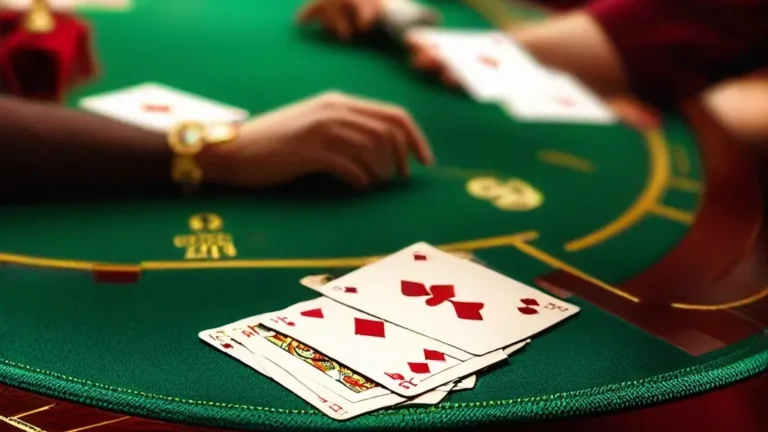
I’ll never forget my first time at the baccarat table. The hushed atmosphere, the crisp snap of the cards, and the sudden cheers erupting from a seemingly random outcome – it was a whirlwind. What struck me most was the almost mystical reverence surrounding the term “natural.” It was like a secret code whispered among seasoned players, hinting at an instant victory, a shortcut to the thrill. From that moment, I was hooked, determined to understand the power behind these so-called natural hands.
In baccarat, a natural hand isn’t just a lucky draw; it’s a game-changer. It represents an immediate win, bypassing the usual drawing rules and injecting a potent shot of adrenaline into the game. Understanding natural hands is crucial for any baccarat player looking to move beyond simple chance and embrace a more strategic approach. It’s the key to recognizing opportunities, anticipating outcomes, and ultimately, increasing your odds of success. So, let’s dive in and unlock the secrets of the natural hand – your pathway to mastering the captivating game of baccarat.
What is a “Natural” in Baccarat?
In the captivating game of Baccarat, a “natural” is a term that sends a ripple of excitement through the players. It signifies a powerful start, an almost instant win, and a strategic advantage. But what exactly constitutes a natural? Simply put, a natural in Baccarat is a hand that totals either eight or nine with the initial two cards dealt.
Understanding card values is key to recognizing a natural. Aces are worth one, cards two through nine hold their face value, and the ten, Jack, Queen, and King each have a value of zero. So, if your first two cards are a seven and a two, your hand totals nine – a natural! Similarly, holding an Ace and an eight also creates a natural nine.
The significance of a natural lies in its immediate implications. When a player or the banker receives a natural, the hand is immediately revealed. A natural nine beats a natural eight. The round typically concludes without any further cards being drawn. Knowing this rule can give you an edge, allowing you to anticipate the game’s flow and make more informed decisions when placing your bets. For example, once, when I saw another player get a natural, I knew not to bet on another hand, or it could result in a tie.
The Rules Governing Natural Hands
In the captivating game of Baccarat, a “natural hand” holds significant power, often overriding the standard third card rule and dictating an instant outcome. A natural hand occurs when either the Player or the Banker is dealt a two-card hand totaling eight or nine. These totals are referred to as a ‘natural eight’ or a ‘natural nine’, respectively.
The primary rule governing natural hands is straightforward: a natural nine automatically wins the round, regardless of the opponent’s hand. Similarly, a natural eight also secures an immediate victory, unless the opposing hand is a natural nine. This pecking order elevates the importance of the initial deal, injecting a surge of anticipation into each round.
However, the interaction between natural hands can also lead to a push, or a tie. Should both the Player and the Banker be dealt a natural hand of the same value (e.g., both have a natural eight), the round ends in a tie, and all bets are returned. This scenario, while less common, underscores the unpredictable nature of Baccarat.
The presence of a natural hand essentially suspends the third card rule, which normally dictates when and how an additional card is dealt. When a natural hand appears, there is no need to consult the third card rule; the outcome is determined immediately based on the values of the natural hands. This makes understanding the natural hand rules crucial for any Baccarat enthusiast seeking to grasp the nuances of this elegant game.

Player vs. Banker Naturals: Distinctions and Significance
In the captivating game of Baccarat, the term “natural” refers to a hand that totals eight or nine with the initial two cards dealt. These hands hold a special significance, often dictating the flow of the game and influencing payouts. While both Player and Banker can achieve a natural, understanding the nuances between them is crucial for informed betting.
The primary distinction lies not in the hand’s composition itself, but in the subsequent actions triggered. When either the Player or Banker hits a natural, the hand is immediately revealed, and the round concludes. However, the implications differ slightly based on who holds the natural. A Player natural typically results in a straightforward payout of 1:1 on Player bets. A Banker natural also leads to a win for Banker bets, but with a crucial detail: the commission. The standard commission on Banker wins is 5%, reducing the payout to 0.95:1. This commission is in place because the Banker hand has a slightly higher statistical probability of winning.
This seemingly small commission significantly impacts the house edge. It’s the reason why meticulously tracking your wins and losses, especially on Banker bets, is essential. While the difference might seem negligible in a single round, over many hands, the commission can erode your profits if you are exclusively betting on the Banker. For example, if you wager $10 on the Banker and win, you receive $9.50 instead of $10. Over 100 such wins, that’s $50 less in your pocket! Therefore, weighing the odds and understanding the subtle advantage the commission gives the house is vital for any Baccarat player looking to maximize the potential returns.
The Odds and Probabilities of Naturals
In the captivating game of Baccarat, understanding the odds and probabilities surrounding “naturals” is crucial. A natural hand, a term that ignites excitement, refers to a two-card hand totaling either eight or nine. When either the Player or the Banker achieves this remarkable feat, it often dictates the flow of the game and significantly impacts potential outcomes.
Statistically, the probability of a Player receiving a natural hand is approximately 4.48%, while the Banker’s chances stand at roughly 4.48%. This subtle difference, though seemingly negligible, contributes to the Banker’s slightly lower house edge. However, these are just initial probabilities. The true intrigue lies in what happens after a natural is revealed.
When either hand hits a natural, the round concludes swiftly. A natural nine vanquishes any hand except another natural nine, resulting in a tie. A natural eight triumphs over all hands except a natural nine. Considering these scenarios, astute players can strategically adjust their bets based on the initial cards dealt. For instance, if the Player receives a natural eight, a savvy bettor might consider increasing their wager on the Player, recognizing the favorable odds. Remember, an understanding of these statistical nuances adds a layer of strategic depth to the exhilarating world of Baccarat.
How Naturals Impact Baccarat Strategy
Baccarat’s allure lies in its simplicity, yet beneath the surface simmers a complex game of probability and prediction. One crucial element often overlooked is the impact of “naturals”—hands totaling eight or nine dealt on the initial two cards. Understanding how these naturals influence the game is paramount to crafting a successful baccarat strategy. By understanding the likelihood and frequency of natural hands, players can make better betting decisions and ultimately reduce the house edge.
The appearance of a natural significantly shifts the immediate odds. When a natural occurs, the hand is immediately concluded, impacting the potential for further card draws and bets placed on those actions. Savvy players constantly adjust their betting approach, capitalizing on perceived shifts in momentum arising from these high-value hands. While baccarat is largely a game of chance, recognizing and reacting to the patterns of natural occurrences introduces a layer of strategic depth, helping to make more informed decisions. Players should focus on anticipating the short-term ebbs and flows of the game influenced by naturals, recognizing that their influence extends beyond the single hand in which they appear.
Spotting Trends in Natural Distribution
Attempting to predict the exact occurrence of naturals is a fool’s errand, but perceptive players can discern subtle shifts in their distribution that might inform betting decisions. It’s crucial to avoid succumbing to cognitive biases, such as the gambler’s fallacy, which suggests that past events influence future outcomes in a purely random game. Just because there have been several naturals in a row, it doesn’t mean a drought is coming.
In my experience, it is crucial to resist the urge to jump to conclusions about patterns. While a short-term cluster of natural hands might feel significant, a larger sample size almost always reveals their random distribution. Instead of trying to predict when naturals will appear, focus on managing your bankroll effectively and adjusting your bet sizes based on the overall flow of the game, rather than attempting to exploit perceived trends in natural occurrence. The key is disciplined observation coupled with a realistic understanding of probability. Don’t be fooled by short-term variance.

Myths and Misconceptions About Naturals in Baccarat
Baccarat, a game often shrouded in mystique, attracts its fair share of myths and misconceptions, especially concerning “natural” hands – those achieving a score of 8 or 9 with the initial two cards. Let’s debunk some common fallacies:
Myth: A natural hand guarantees a win.
Reality: While a natural hand is strong, it doesn’t guarantee victory. If both the Player and Banker have naturals, the higher value wins. If they’re the same, it’s a tie. The dealing of the cards is random, so it is never certain that you will win.
Myth: Getting consecutive naturals means you’re on a “lucky streak.”
Reality: Each hand in Baccarat is independent. Past results, including naturals, have no bearing on future outcomes. The odds reset with every new deal.
Myth: “Counting” naturals can predict future outcomes.
Reality: Baccarat, unlike games like blackjack, doesn’t lend itself to card counting in the traditional sense. While tracking dealt cards might subtly alter the probabilities, the effect is minimal, and casinos often shuffle decks frequently to counteract such attempts.
Myth: Certain tables are “hot” for naturals.
Reality: This is pure gambler’s fallacy. The table itself has no influence on the cards dealt. It all boils down to the shuffle and the random distribution of the deck.
Understanding the math is important if playing Baccarat. Avoiding those misconceptions will help ensure a more rational and enjoyable gaming experience. Baccarat is a game of chance, and luck plays its hand in every deal.
Advanced Strategies Involving Natural Counts
Baccarat is a game of chance, but astute players recognize subtle shifts in card distribution that can influence betting decisions. One advanced strategy revolves around observing and adapting to changes that maximize the occurrence of natural counts – hands totaling eight or nine.
Identifying Distribution Shifts
The composition of the remaining cards in the shoe changes with each round played. As cards are dealt, the ratio of high cards (tens and face cards) to low cards (two through six) fluctuates. Savvy baccarat players track these changes, either mentally or using notational systems, to identify moments when the likelihood of natural counts increases. For example, if numerous low cards have been dealt, the probability of a natural eight or nine appearing in subsequent hands rises.
Exploiting Natural Count Opportunities
Once a player detects a favorable distribution of cards, they can modify their betting strategy to capitalize on the increased chance of natural counts. This often involves increasing bets on the Player or Banker hand, depending on which hand the player thinks is more likely to get a natural. Detecting opportunities requires a keen eye and a solid understanding of probability.
Adapting to Natural Hand Frequency
The frequency of natural hands also provides insight. If a game has seen a high number of naturals early on, it suggests a shoe with a higher concentration of cards that lends itself to natural counts. In such instances, maintaining a slightly elevated betting level throughout the game may prove beneficial. Conversely, a scarcity of natural hands could indicate a shoe where value cards such as, sevens and eights, are overrepresented, which slightly favors hands totaling six or seven. This situation calls for a more conservative approach.
However, it’s important to realize that baccarat has a considerable element of randomness. Even with careful observation and strategic adjustments, no system can ensure guaranteed winnings. Use these techniques as enhancements to your enjoyment of the game.
Conclusion
Understanding Baccarat natural hands is more than just knowing the rules; it’s about mastering the game. Recognizing these instant-win scenarios gives players a significant edge, allowing for quicker decisions and potential strategic adjustments based on the flow of the game.
By grasping the nuances of natural hands – when they occur and what they mean – players can elevate their Baccarat experience from simple chance to informed strategy. This knowledge translates to increased confidence at the table and a higher probability of successful outcomes. Embrace the power of natural hands, and watch your Baccarat game transform.
Now that you’re armed with this expert advice, step into the casino with newfound confidence and apply these strategies. Feel free to find me on other platforms where I share even more tips and tricks to dominate not just Baccarat, but a variety of other casino games!